
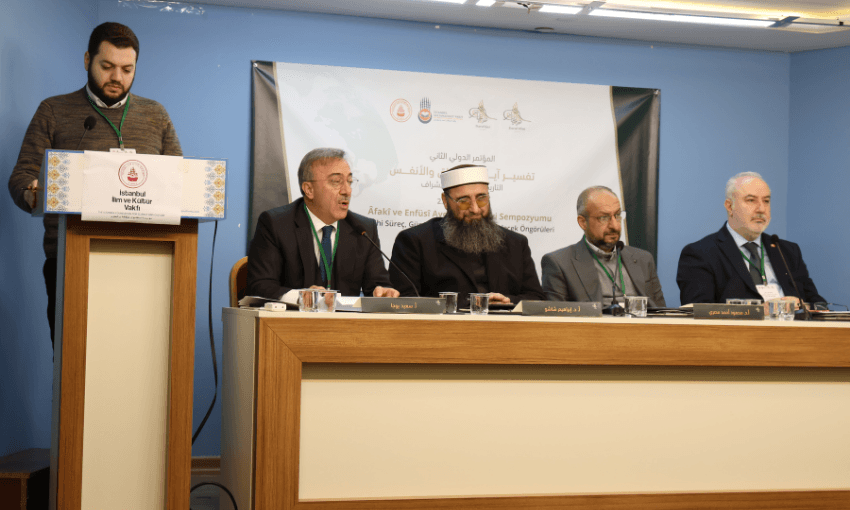
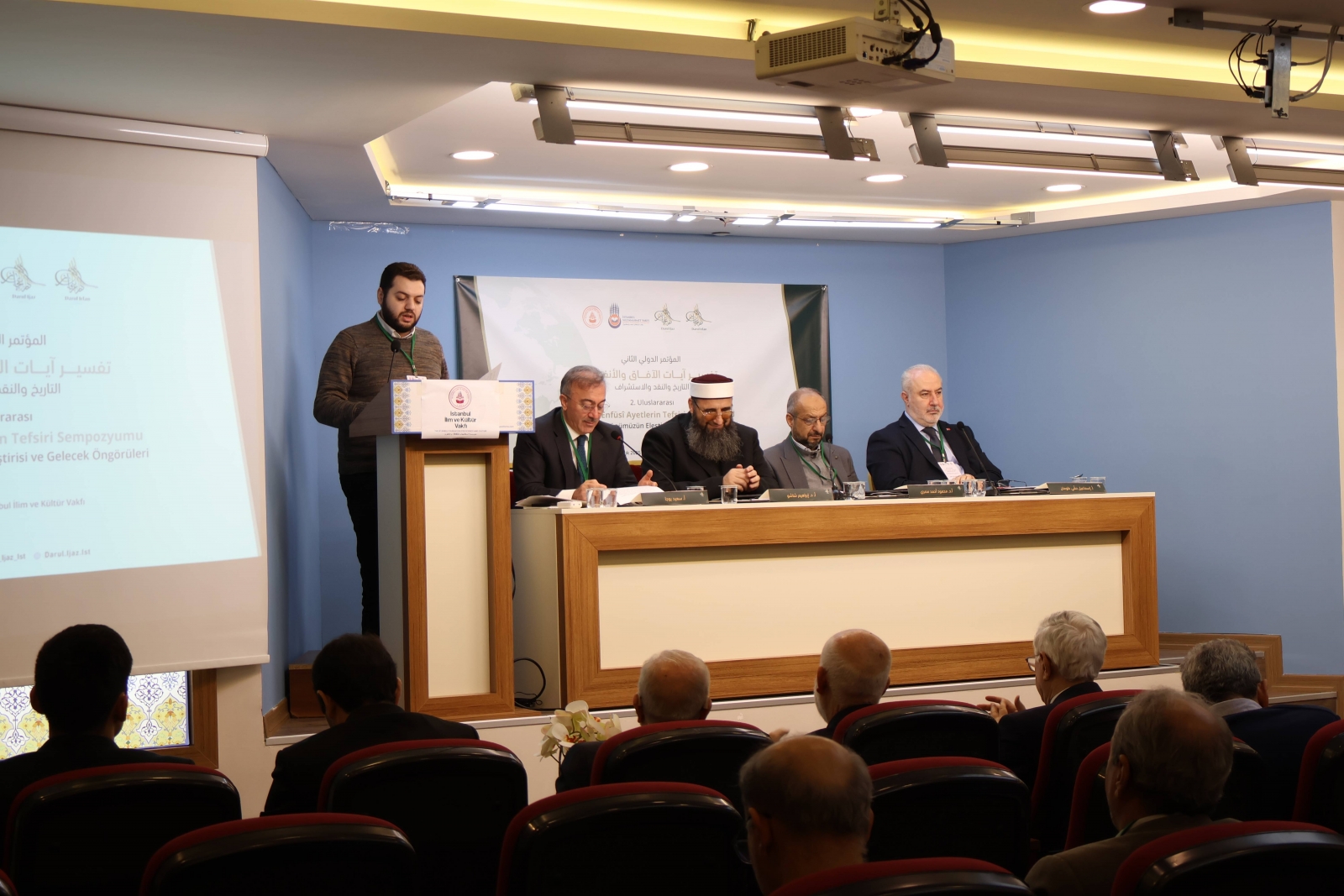
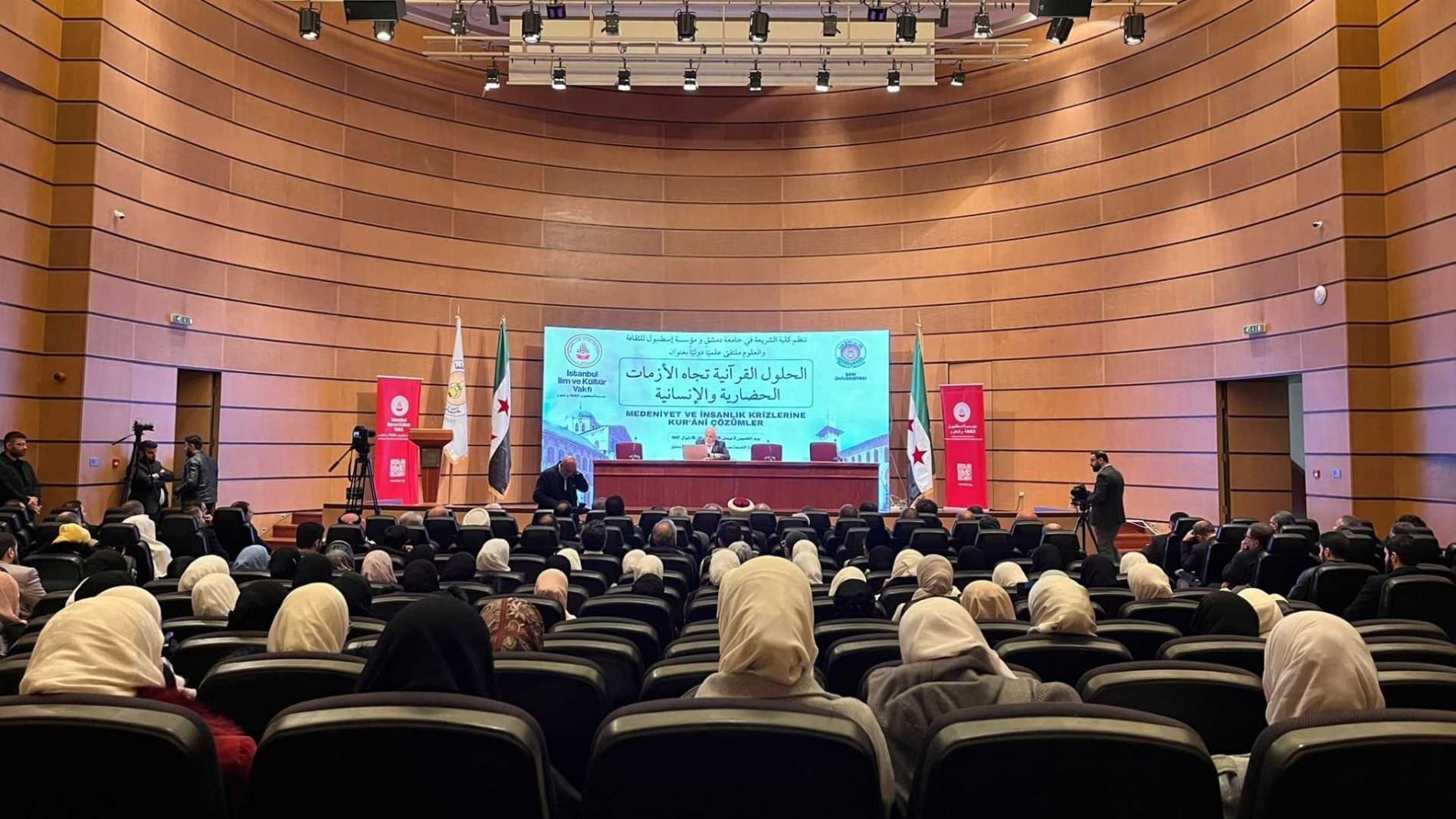
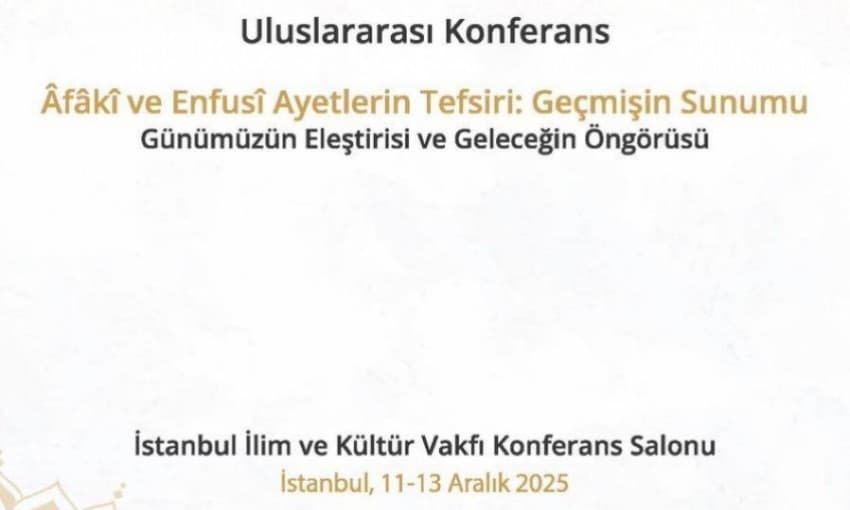
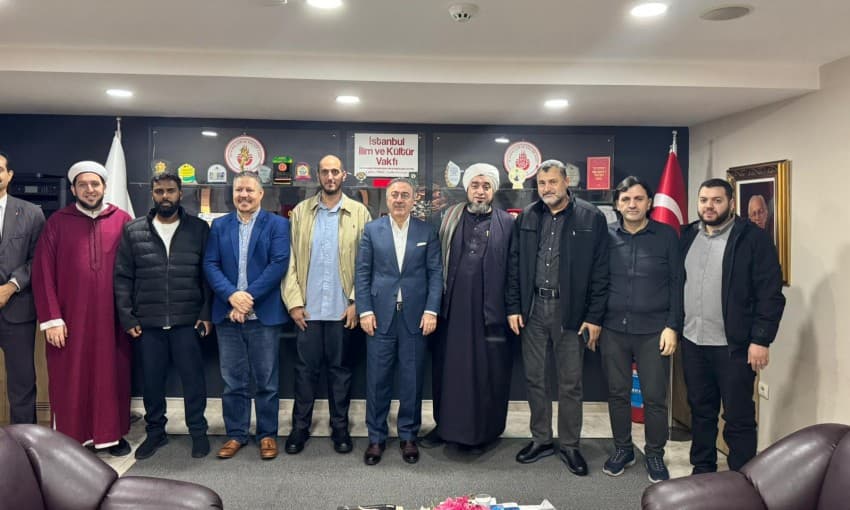
Hosted by the İstanbul İlim ve Kültür Foundation, and organized in collaboration with the Sultanahmet Foundation, Darul Ijaz, and Darul Irfan, the international symposium titled "Exegesis of Afaqi and Anfusi Verses: Presentation of the Past, Criticism of the Present, and Foresight of the Future" brought together distinguished scholars from various countries of the world in Istanbul.
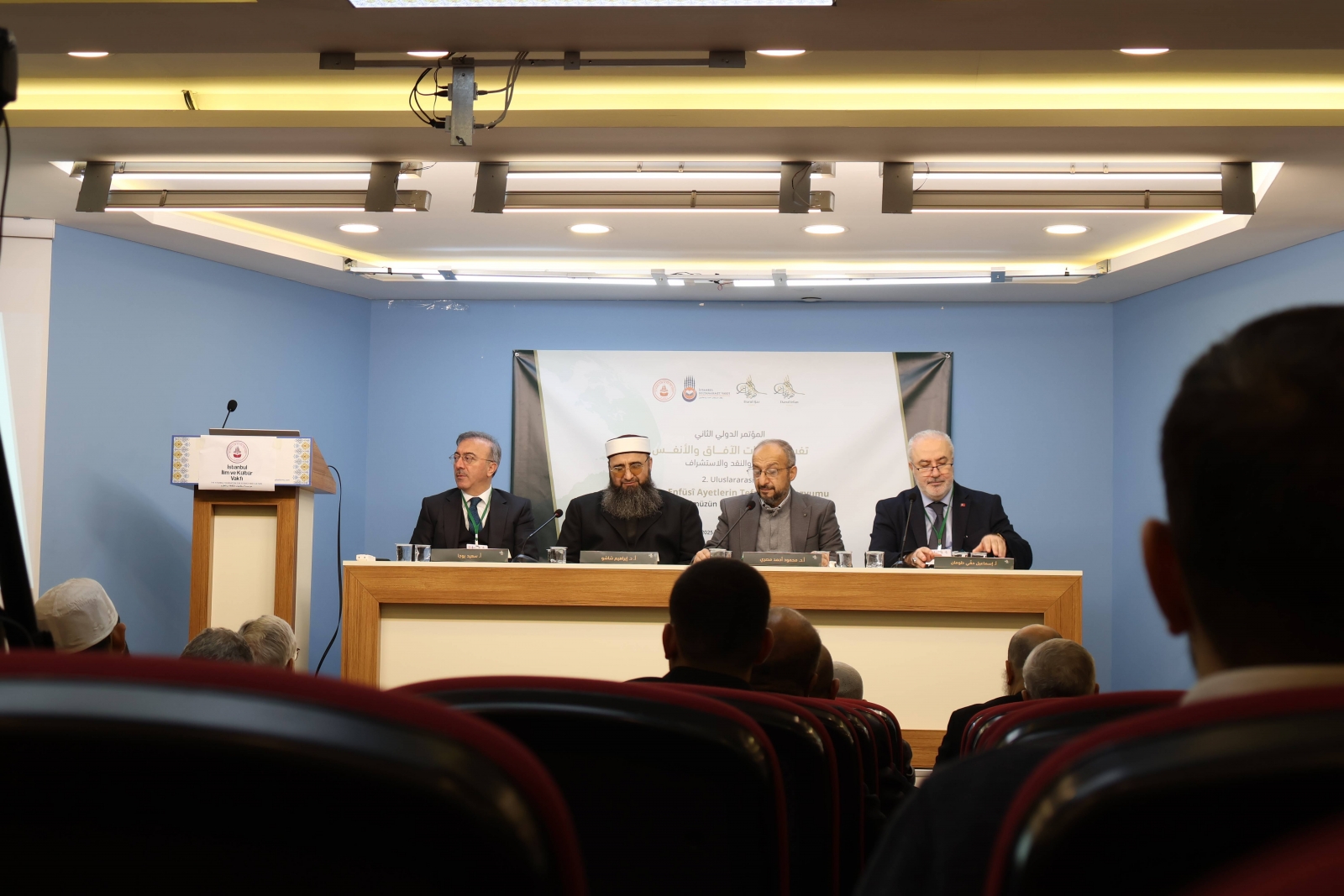
In the opening session, Prof. Dr. Mahmud Ahmed Misri, Prof. Dr. Muhammed Bourabab, İsmail Hakkı Toman, Prof. Dr. İbrahim Şaşu, and Said Yüce contributed with greeting speeches. Subsequently, Prof. Dr. Celaleddin Hancı delivered the introductory speech, while the guest of honor of the symposium, Prof. Dr. Hassan Şemsi Pasha, made evaluations that guided the program with an impactful address.
This strong start reflected the academic richness of the symposium and created high scholarly anticipation for the upcoming sessions.
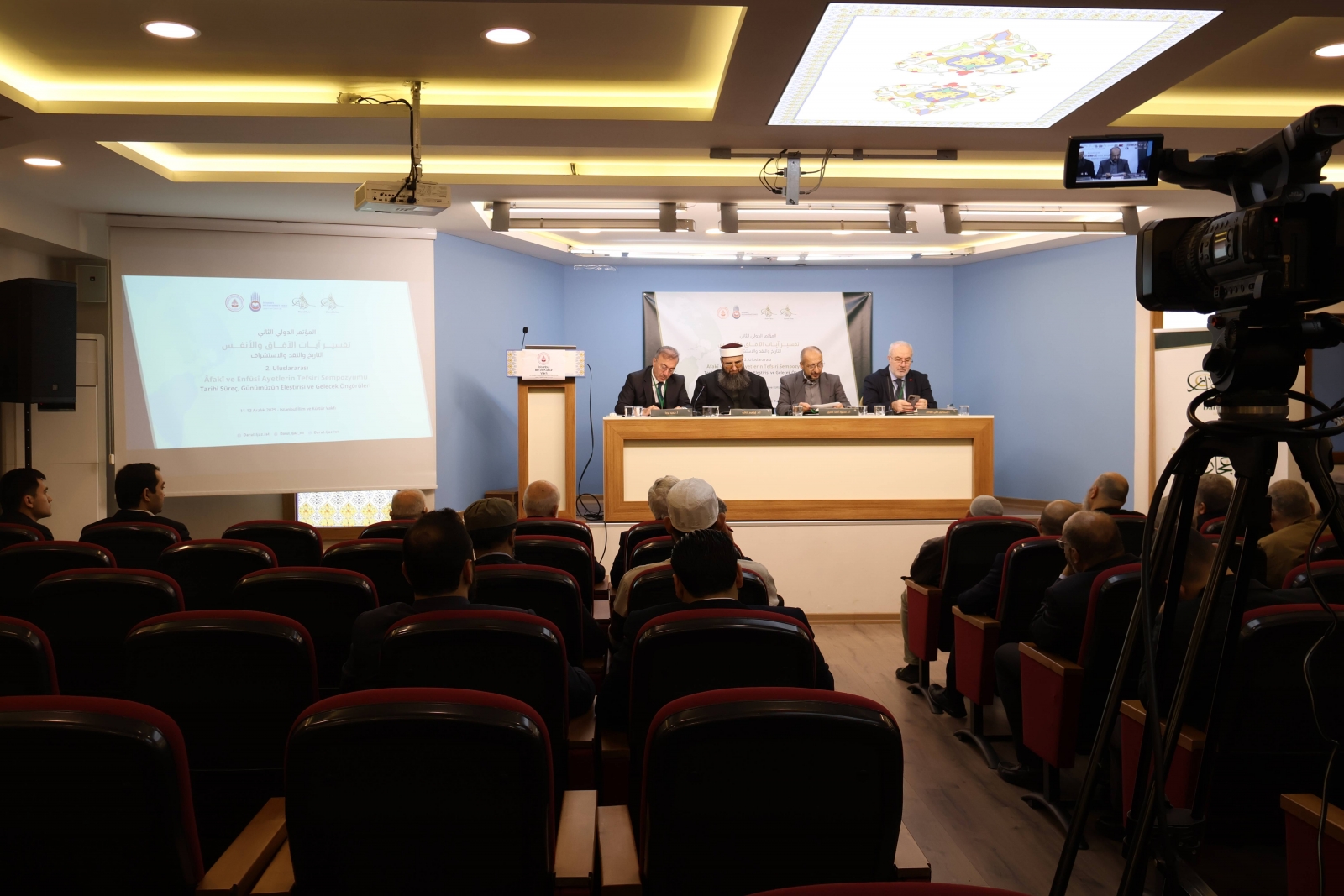
Aiming to prepare a ground for comprehensive discussions on how the cosmic (kevnî) and inner (enfusî) verses of the Quran should be understood in our age, the symposium offers the opportunity to address the historical accumulation of the exegesis tradition and the needs of the modern world within the same framework.
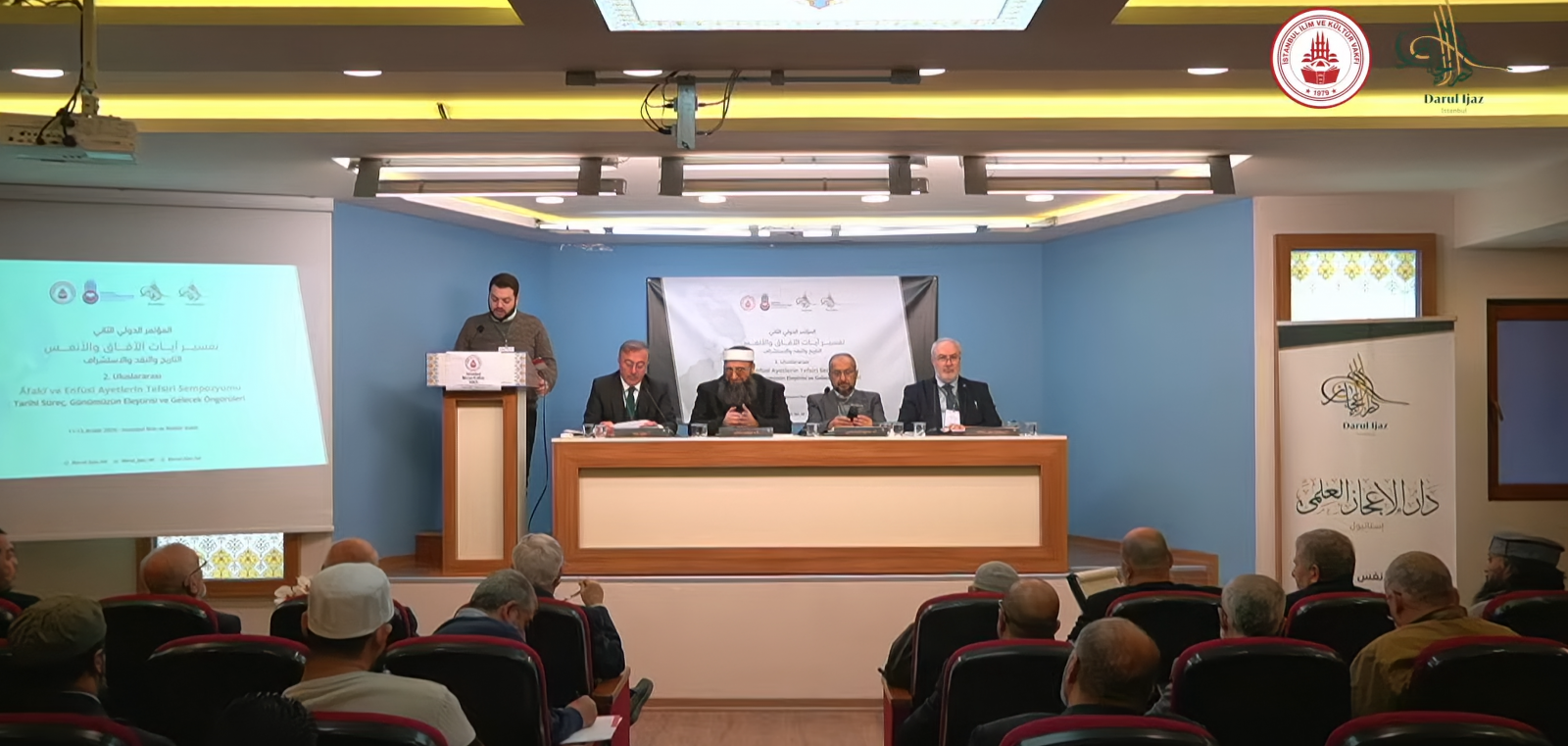
In his opening speech delivered in this scholarly atmosphere, Said Yüce set a strong direction for the symposium with impressive evaluations centering on the reflection-based method of the Risale-i Nur.
“This Meeting of High Scientific Value is a Door of Goodness for the Ummah”
Beginning his speech by greeting the participants, Said Yüce expressed their satisfaction in hosting scholars in Istanbul on behalf of the organizing institutions. He hoped that this international meeting would be a "knowledge assembly yielding beneficial results" for the Islamic Ummah and the academic community.
The Prophet Muhammad’s Central Position in Exegesis and the Scientific Legacy Spanning Centuries
Emphasizing that the most competent commentator of the Quran is the Prophet (pbuh), Yüce recalled Verse 44 of Surah An-Nahl to demonstrate the primary basis of exegesis:
“We revealed this Reminder to you so that you may explain to people what was revealed to them.”
Stating that this verse has determined the direction of the science of exegesis throughout history, Yüce expressed that scholars, who are the heirs of the Prophet, are the names continuing this blessed duty, and the classical exegesis accumulation was formed through the links of this chain.
.JPG)
“Risale-i Nur is a Spiritual Exegesis of the Quran”
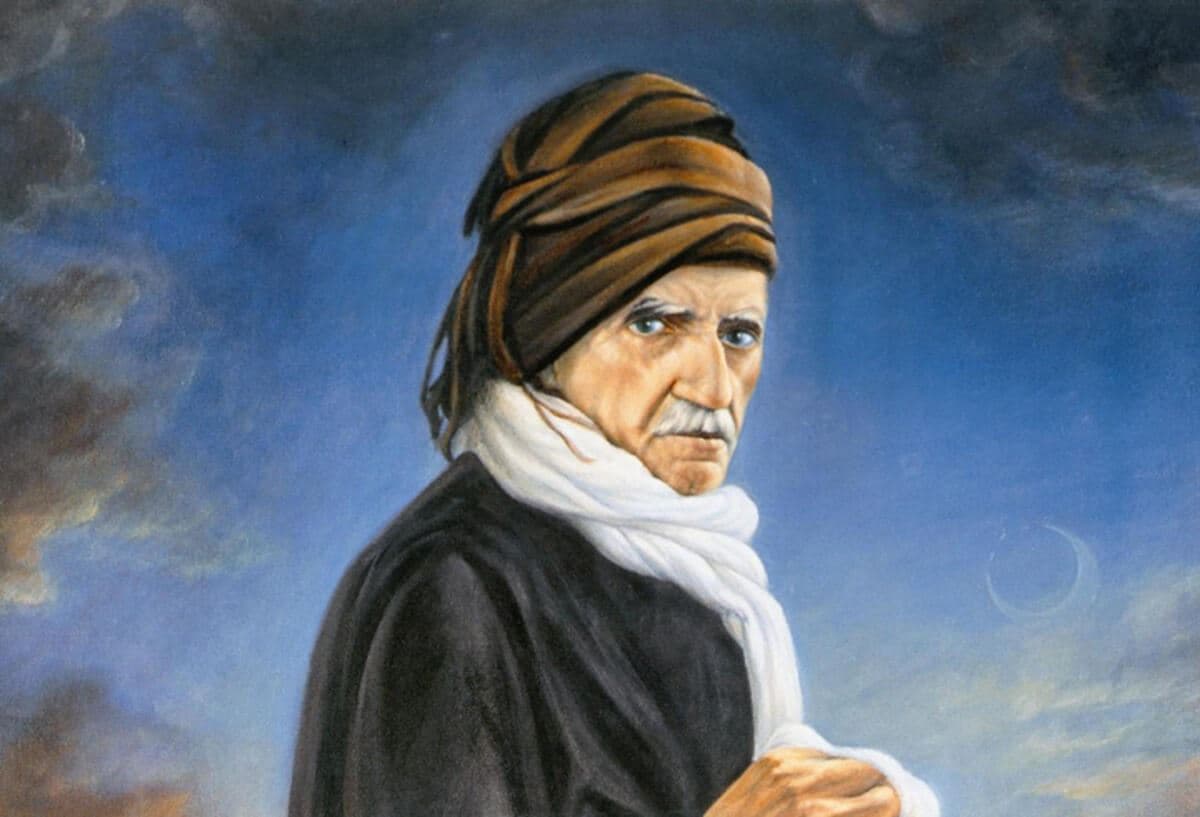
The most striking part of the opening speech was the comprehensive evaluation regarding Bediüzzaman Said Nursi’s understanding of exegesis. Reminding that the first extensive Turkish exegesis was penned by Bediüzzaman at the beginning of the last century, Yüce summarized the aspects of the Risale-i Nur that distinguish it from the classical exegesis method as follows:
-
In a period when religious sciences were suppressed and trends shifted towards materialism, a unique path was followed that proves the truths of belief of the Quran with rational and logical proofs.
-
Risale-i Nur aimed to provide investigative belief (tahkikî iman) against the crises of faith of the modern age.
-
Instead of technical explanations such as recitation, lexicon, and grammar provided by classical commentaries, it focuses on establishing the truths of the Quran in the human mind and heart.
Drawing attention to the expression "a very strong and true exegesis of the Quran" used by Bediüzzaman for his work, Yüce explained the place of Risale-i Nur among the types of exegesis:
“The first part of exegesis explains the wording of the Quran; the second part proves the truths of belief of the Quran. This is the part Risale-i Nur is based on, and in this respect, it is unique.”
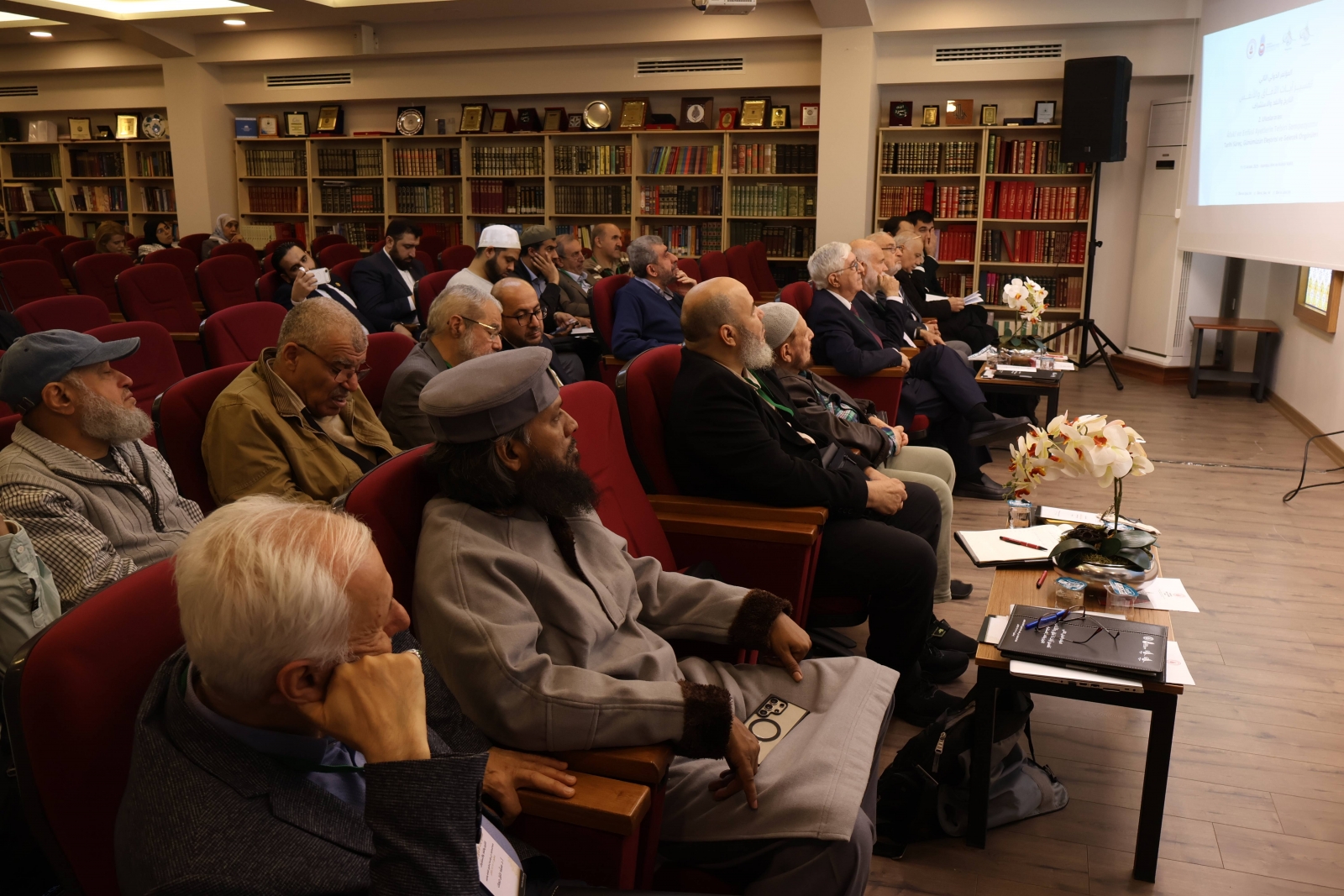
Reflection-Centered Exegesis with Examples of Basmala and Prophet Yunus
Said Yüce explained the understanding of exegesis of the Risale-i Nur with concrete examples.
He stated that the Basmala is a spiritual key that raises man to the "station of an inspector of the Creator"; that the universe functions with mercy and this is gathered in the truth of the Basmala.
He emphasized that the story of Prophet Yunus (Jonah) turns into a deep representation describing how man drowns in the whirlpools of the ego and the world.
He expressed that these examples offer a powerful spiritual reading style that reinterprets Quranic stories and concepts on the axis of existence, man, ego, and reflection.
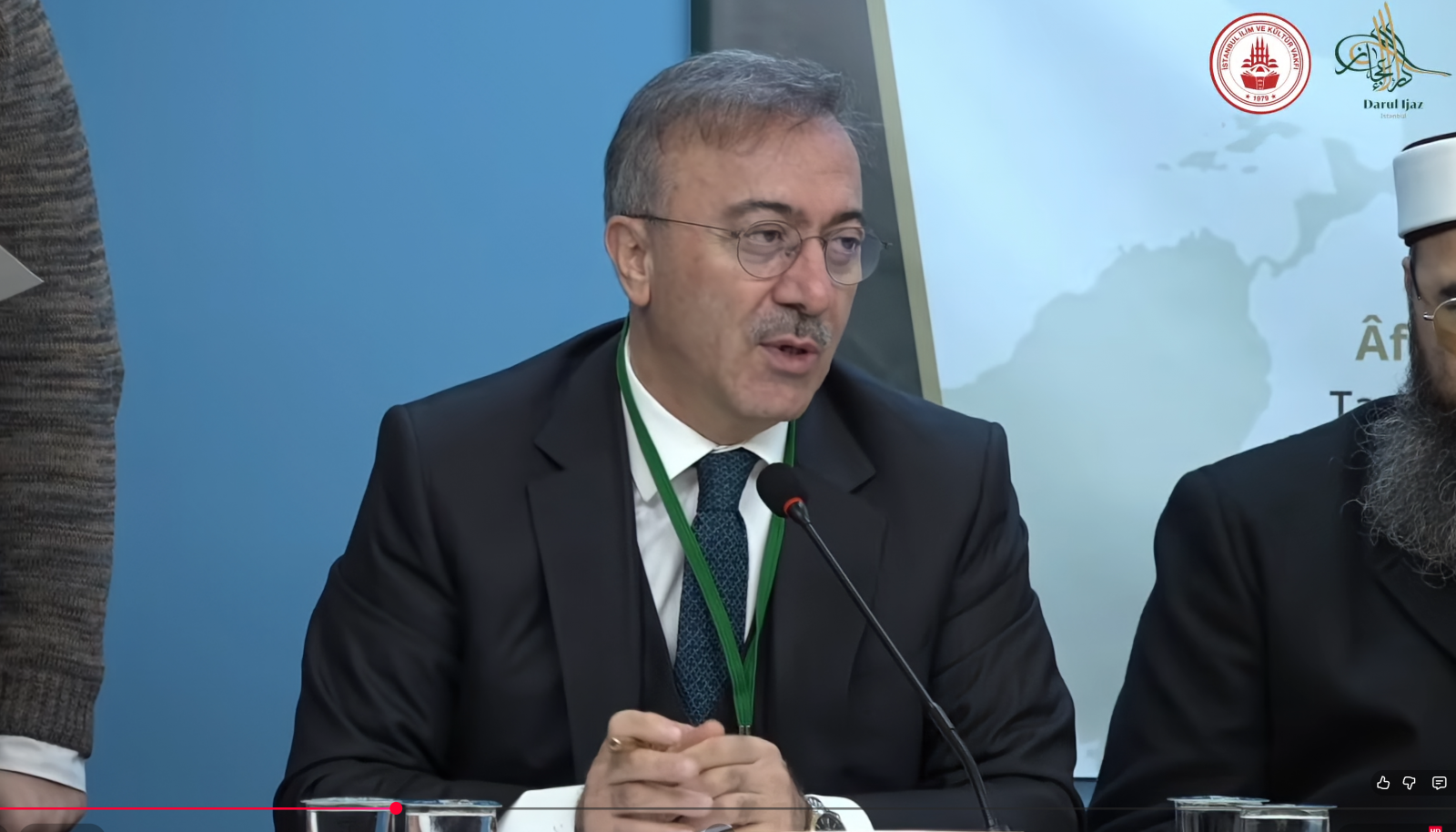
“The Quran is an Eternal Translation of the Book of the Universe”
Yüce conveyed how the Quran is described in the Risale-i Nur with a long quotation from the section "What is the Quran?" in the 25th Word. In this definition, the Quran is defined as:
-
The eternal translation of the book of the universe,
-
The interpreter of the Unseen and Visible worlds,
-
The discoverer of the spiritual treasures of the Divine Names,
-
The map of the realms of the Hereafter,
-
The true guide of humanity.
Yüce emphasized that this perspective constitutes the axis of the Risale-i Nur exegesis.
.png)
Method of Reading Cosmic Verses: “If the Quran and the Universe Are Read Together, the Truth Becomes Complete”
Touching upon the "criticism of the present and foresight of the future" indicated in the symposium title, Yüce said that the Risale-i Nur method offers a significant opening for the people of this age to understand the Quran:
- The universe is a book; the Quran is the key to understanding this book.
- Reflection in matters of faith deepens with the reading of cosmic verses.
- There is a need for a reading that convinces the reason and satisfies the heart against the intellectual attacks to which modern man is exposed.
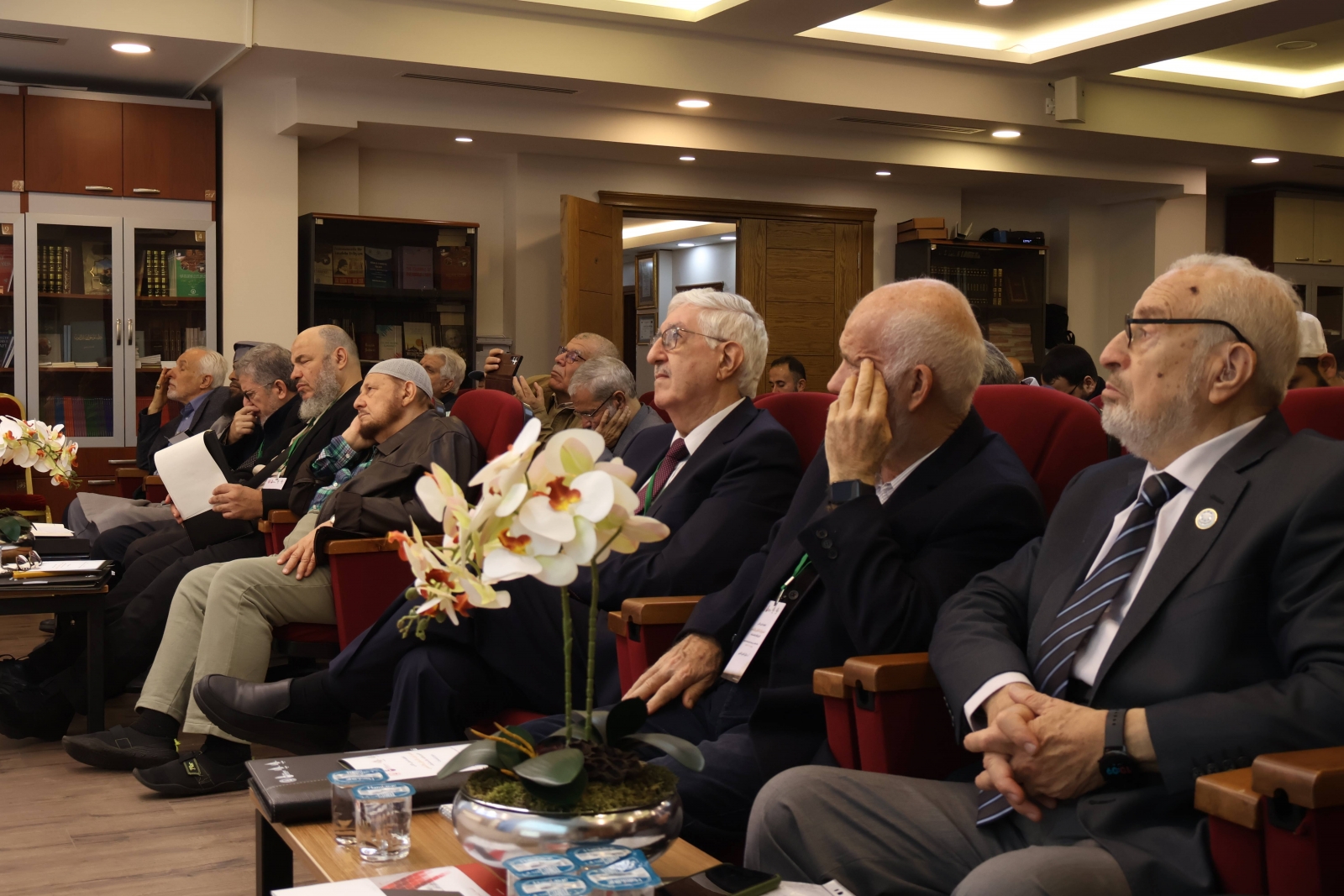
“Turkey’s Recent History Clearly Shows the Influence of Risale-i Nur”
In the final part of his speech, Yüce touched upon the influence of the Risale-i Nur on society. He stated that in periods when religion was attempted to be completely destroyed, a great spiritual jihad was put forth by reproducing the works with handwriting.
He emphasized that this movement proceeded on a line that:
-
Preserves public order,
-
Is far from politics,
-
Targets only God's pleasure.
He expressed that the translation of the Risale-i Nur into more than 60 world languages today "guides the faith of millions of people worldwide."
“Prescriptions of the Quran Pharmacy are the Cure for Humanity’s Troubles”
Ending his speech with an emotional tone, Said Yüce stated that thanks to the Quranic prescriptions offered by the Risale-i Nur, both the Muslim world and humanity can be saved from their material and spiritual diseases, and he greeted the participants with respect.
.png)
Following the opening speeches, comprehensive sessions addressing different dimensions of cosmic and anfusi verses are planned to be held throughout the day. In the first session, historical foundations of cosmic verses and their place in the tradition of exegesis will be discussed; subsequently, the method of scientific exegesis, sources of rational knowledge, contributions of classical exegesis schools, and the methodological framework of contemporary approaches will be addressed. As the program progresses, the Maturidi tradition, interpretations of thinkers like Haralli and Bennabi, effects of modern sciences on exegesis, and Zaghloul El-Naggar's scientific I'jaz studies will also be evaluated in separate sessions. The next day, a special session dedicated to the exegesis of cosmic verses in the Risale-i Nur, followed by discussions, the concluding declaration, and the signing of cooperation agreements, is expected to further deepen the academic richness of the symposium.
Related content
13th International Bediuzzaman Symposium
The 13th edition of the Bediuzzaman Symposium, organized by the Istanbul Foundation for Knowledge and Culture (İFKC) since 1990, will take place on October 4–7, 2026, in Istanbul. Bringing together hundreds of academics, scholars, madrasa teachers, influencers, media professionals, and senior bureaucrats from across the globe and every continent, the symposium aims to offer solutions to the material and spiritual crises that the world is currently facing. With the participation of individuals from various faiths and cultural backgrounds, the symposium will seek to find answers to today’s global challenges through the guidance of the Qur’an and Sunnah, under the light of shared human values. A detailed announcement regarding the main theme and subtopics of the symposium will be shared with the public in the coming days.