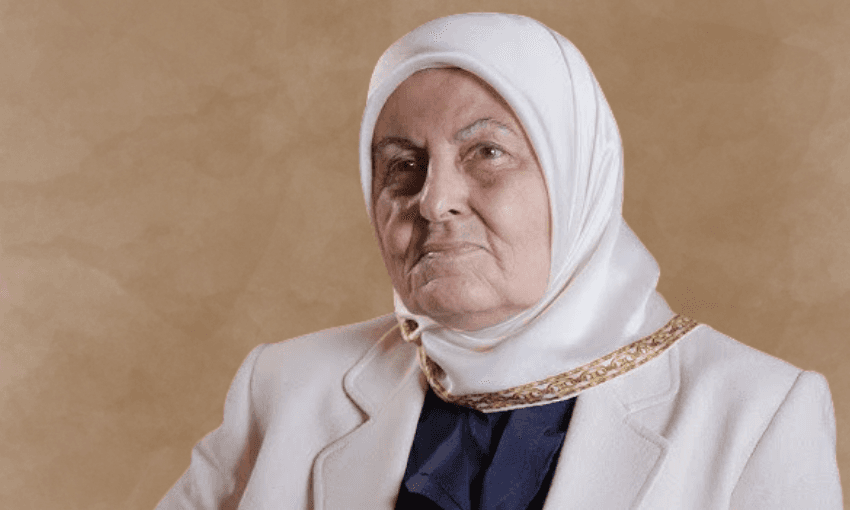
Pedagogue and author Necla Koytak, speaking at the Family School Parent Education Program organized by the Istanbul Institute of Civilization, provided comprehensive assessments on identity, motherhood, modern culture, and social transformation. Koytak defined motherhood not merely as a biological or temporary role, but as the “fundamental domain through which human values are transferred to society.”
Sharing segments from her own life at the beginning of her speech, Koytak stated that what determines a person’s age is the “meaning and responsibility they shoulder,” adding, “Living for a purpose keeps a person young.”
"Motherhood is a Level of Dedication, Unlike Modern Identity"
Koytak explained that motherhood means “dedicating oneself to the development of another being by placing one's own desires in the background.”
"She starves to feed, goes thirsty to quench the thirst, goes unclothed to clothe. This is an existential consciousness of responsibility. This is also what we call taqwa (piety),” said Koytak, noting that the modern world imposes the exact opposite.
Koytak asserted that the modern identity constantly sends the message to the individual: “Center your own happiness,” which conflicts with the values motherhood generates, such as love, devotion, care, compassion, and altruism.
"Modern Capitalist Ideology is Sweeping Away Human Values"
Koytak listed the values prioritized in modern society as “power, visibility, career, wealth, and personal achievement,” stating that this weakens human bonds.
“The most destructive result of modern civilization is that it eradicates human values and replaces them with utilitarian values,” Koytak said, suggesting that these values dissolve society and isolate individuals.
"The Love and Compassion Generated by Motherhood is a Force of Resistance Against Ideology"
Koytak argued that the innate feminine feelings of compassion, mercy, empathy, and protection have become targets of modern ideology.
“Motherhood has become a political domain today. Because modern ideology wants to destroy human values; motherhood, however, reproduces them.”
"Youth are More Depressed; Parents' Identities are Shaped by the Dominant Culture"
Koytak expressed that the lifestyle imposed by modern culture weakens family values, which leads to “loss of belonging, and an increase in anxiety and depression” in children.
She emphasized the confusion with an example related to politician research: “85% said ‘Politicians are liars,’ and yet 85% also said ‘I would allow my daughter to marry a member of parliament.’”
"The Starting Point for Changing Society is the Mother and Early Childhood"
Quoting the approach of UN expert Robert Myers, Koytak recalled the statement, “The most accurate starting point for social change is early childhood,” noting that the mother is the primary agent during this period.
"See Motherhood as a Domain of Power"
Koytak urged women to realize the power of motherhood, stating, “This role is a domain of power that can initiate social change.” She specified that emotional intelligence is merely the modern name for classic human values, and these values become embedded in a child’s identity during the first six years.
"Refuge in a Secularized Society: Identity Derived from Faith"
During the Q&A session, Koytak emphasized: “The identity we derive from faith is both a sanctuary and a field of struggle. A Muslim must stand like a Mujahid (a spiritual warrior); they must defend their own values.”
"Building a Civilization Begins with Character Construction"
Referring to the approach of Ibn Bajjah, Koytak said, “The first step of civilization is the construction of character,” asserting that this begins in early childhood today.
"If We Cannot Dream of Our Own Civilization, We Become Part of Others' Dreams"
She concluded her speech with this message: “If we do not have a dream, we become extras in the dreams of other powers. Being a Caliph (Vicegerent of God) means being responsible for establishing a system of justice and mercy on Earth.”
The nearly two-hour program concluded with mutual thanks.
Participants described the talk as “sociologically, psychologically, and religiously eye-opening.”
Related content
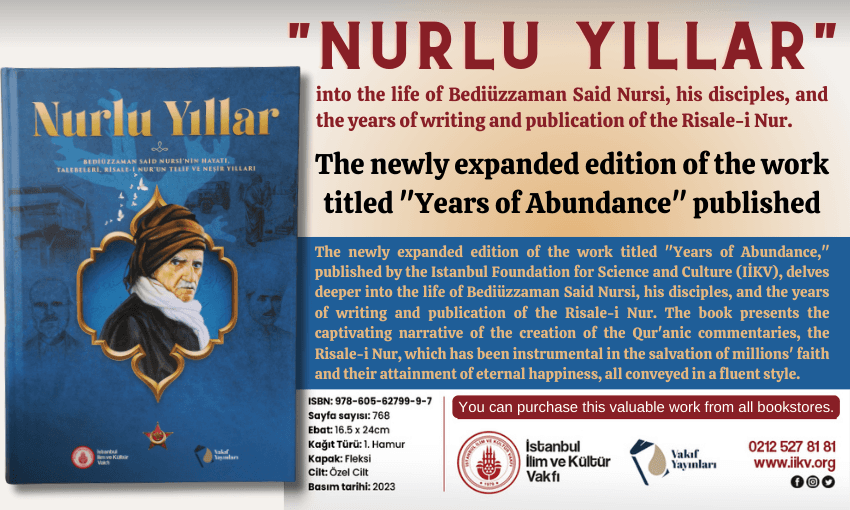
The newly expanded edition of the work titled "Years of Abundance" published
The newly expanded edition of the work titled "Years of Abundance," published by the Istanbul Foundation for Science and Culture (IIKV), delves deeper into the life of Bediüzzaman Said Nursi, his disciples, and the years of writing and publication of the Risale-i Nur. The book presents the captivating narrative of the creation of the Qur'anic commentaries, the Risale-i Nur, which has been instrumental in the salvation of millions' faith and their attainment of eternal happiness, all conveyed in a fluent style.